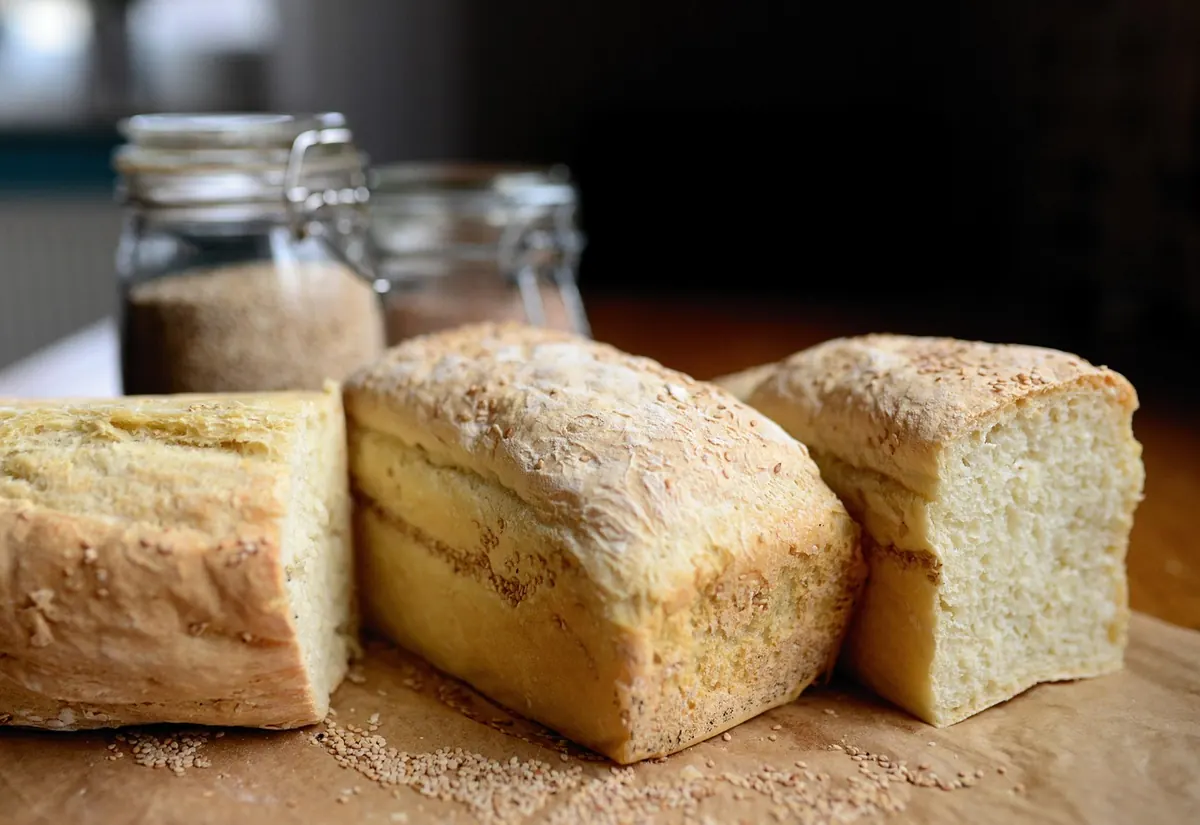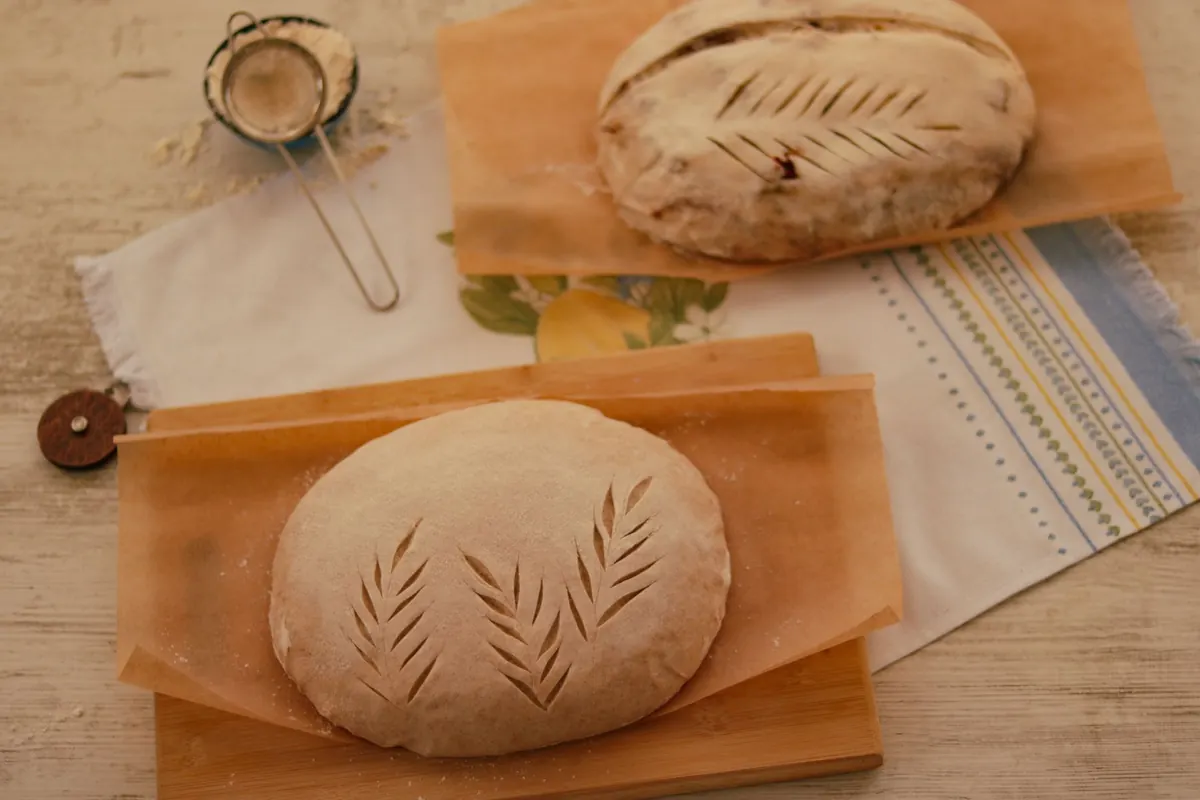

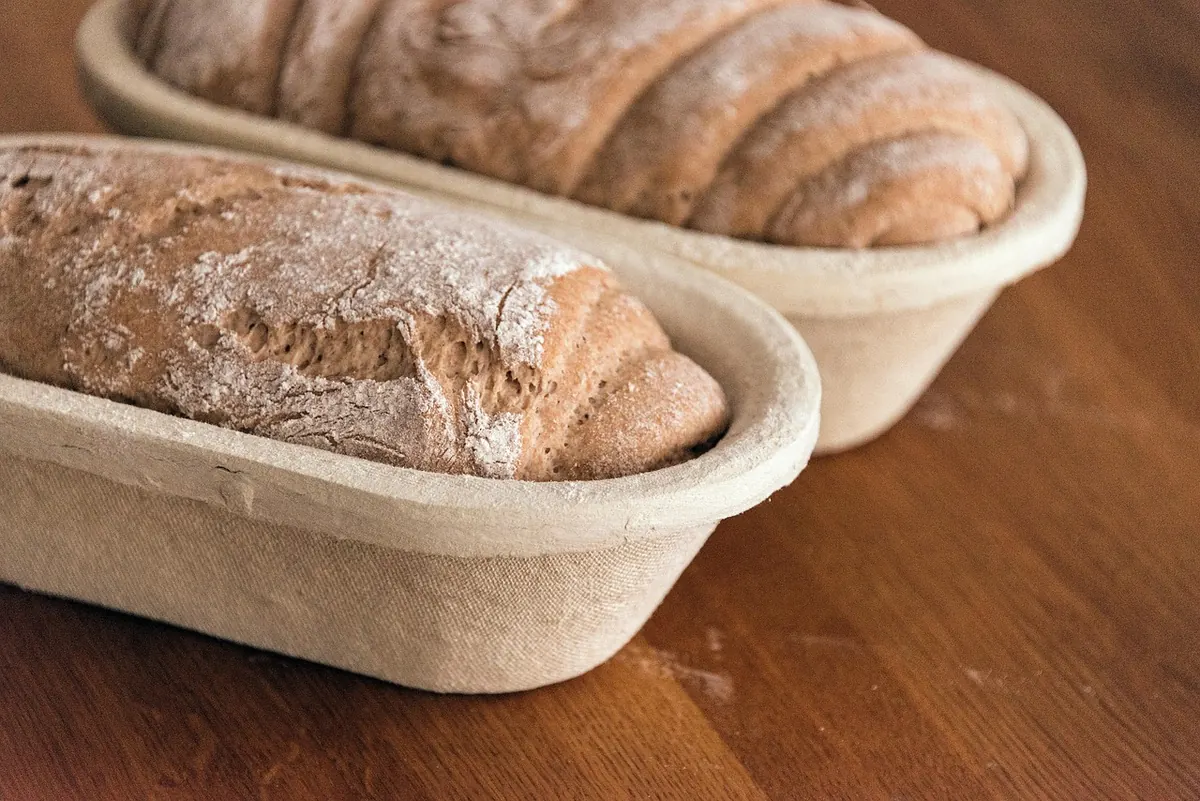
A loaf made with a third whole wheat flour can be nutty, tender and deeply satisfying. It can also come out of the oven looking like a doorstop. The difference is rarely the flour itself — it is the water, the mixing and the timing around it. White flour is forgiving; whole wheat asks you to pay attention. Once you know what it is doing to your dough, the swap stops being a gamble and becomes a dial you can turn.
Choose a Ratio Before You Touch the Water
Work by weight, always. A cup of whole wheat flour does not weigh the same as a cup of white, and volume measurements will send you off in the wrong direction before you have even started. Keep the total flour weight of your recipe exactly where it was and replace a portion of the white flour with whole wheat.
Where to start depends on what you want from the bread:
- 20–30% whole wheat: barely a change in handling. You get colour, a little flavour, and a crumb that still looks like a classic white loaf. Good first attempt.
- 30–50%: the sweet spot for sandwich bread and everyday sourdough. Noticeably wheaty, still open enough to hold butter.
- 50–75%: a different bread. Denser, more strongly flavoured, slower to rise and quicker to over-proof. Worth doing, but do it after you have baked one of the lighter versions.
- 100%: possible and delicious, but treat it as its own recipe rather than a substitution. Everything below applies, only more so.
One more choice: fine whole wheat flour behaves much more like white flour than coarse stoneground does. If your first attempt is disappointing, check the grind before you blame the ratio.
Add Water in Two Stages
Bran absorbs water slowly and unevenly. A dough made with whole wheat can feel perfectly normal after mixing and then turn stiff and tight twenty minutes later, because the bran has finally drunk its fill. If you only judge hydration at the moment you finish mixing, you will under-water the loaf.
A practical rule: for every 25% of the flour you swap to whole wheat, add roughly 5% more water relative to the flour weight. Replacing 125 g of a 500 g flour blend means about 25 g extra water. Start there and let the dough tell you the rest. You are looking for a dough that feels slightly softer and stickier than your white version at the same stage — not wet, just more relaxed.
The bran soak, if you want to go further
Sift the coarse bran out of your whole wheat, soak it in an equal weight of hot water for twenty minutes, and add it back at the end of mixing. The dough develops more easily, the crumb opens up, and you keep the flavour and colour. It costs you one extra bowl and ten minutes. It is the single most useful trick for loaves above 50% whole wheat.
Build Gluten With Time, Not Just Mixing
Bran particles act like tiny blades: they physically interrupt the gluten network and they soak up water that the flour proteins would otherwise use. The answer is not to knead harder. It is to give the flour time before you ask anything of it.
Mix flour and water only — no salt, no levain — and leave it covered for 30 to 45 minutes. Whole wheat benefits from a longer rest than white. Then add your salt and starter and mix to full development. If you use a stand mixer, keep it on a low speed for longer rather than a high speed for shorter; whole wheat doughs respond better to gentle, extended work.
During bulk fermentation, use stretch-and-folds rather than a single long knead. Three or four sets in the first hour and a half will do more for the structure than five extra minutes of machine mixing, and you get to feel the dough change as it goes.
Expect Fermentation to Move Faster
Whole wheat carries more of the grain's enzymes and minerals into the dough, and that tends to make fermentation livelier. Do not be surprised if your bulk finishes earlier than it does with the white version of the same recipe. Start checking at the point you would normally leave it alone, and judge by the dough — a domed, jiggly surface, visible bubbles at the edges, a 50 to 70% rise rather than a strict doubling.
If you are using a sourdough starter, consider holding back a little of the levain rather than shortening the bulk dramatically. Slower is easier to control than faster, and whole wheat dough that over-proofs goes from "ready" to "slack" quickly.
Shape Gently and Bake a Little Cooler
Whole wheat dough is usually more extensible and less elastic than white dough: it stretches readily but springs back less. Preshape with a light hand, give it a proper bench rest, and use a firmer final shape than you think you need. If the dough feels loose, a cold retard in the fridge overnight will firm it up and make scoring far easier.
Bran also darkens and can taste bitter if it scorches, so many bakers drop the oven temperature a little — around 10 to 15°C lower than their white bread setting — once the loaf is loaded, and cover with steam for the first fifteen minutes as usual. Bake to colour and to internal structure rather than to the clock; a whole wheat loaf often needs a few extra minutes to lose its gumminess in the centre even after the crust looks done.
A Starting Point You Can Bake This Weekend
Here is a simple straight dough at 25% whole wheat, adapted from a standard white formula. It makes one 800 g loaf.
- Combine 375 g white bread flour, 125 g fine whole wheat flour and 375 g water (75%). Rest covered for 40 minutes.
- Add 10 g salt and 4 g instant yeast (or 100 g active sourdough starter, and reduce the water slightly). Mix until the dough clears the bowl and feels smooth.
- Bulk ferment at room temperature, folding three times in the first 90 minutes. Stop when the dough is risen by about two-thirds and feels light.
- Preshape, rest 20 minutes, then shape and place in a floured banneton or a lined tin.
- Proof until a finger pressed into the dough springs back slowly and incompletely.
- Bake at 240°C with steam, dropping to 225°C after loading, for 40 to 45 minutes. Cool completely before slicing.
When Something Goes Wrong
Most failures fall into a handful of familiar patterns, and each points to a specific correction:
- Dense, heavy crumb: usually under-hydrated or under-fermented. Add 15 g more water next time and extend the bulk slightly.
- Gummy centre with a dark crust: the loaf needed longer in the oven, or it was cut while hot. Wait until it is fully cool.
- Dough that tears during shaping: too little gluten development or too short a bench rest. Add a fold set and give it ten more minutes.
- Flat, slack loaf: over-proofed. Shorten the bulk and watch the dough rather than the timer.
- Harsh, bitter flavour: too much coarse bran for your taste, or a scorched crust. Try a finer grind or a slightly lower oven temperature.
Bake the Same Loaf Twice
The quickest way to learn this is to change one thing at a time. Bake your usual white loaf, then bake it again with a quarter of the flour swapped and 5% more water. Same yeast, same schedule, same oven. Taste both side by side, note what the dough felt like at each stage, and keep the notes with the recipe. Two or three rounds of that will teach you more than any formula, because you will be reading your own dough rather than following someone else's. After that, the ratio becomes a choice instead of a risk.
Photo: donauwood_de / Pixabay